
Nurturing love, today and through the years
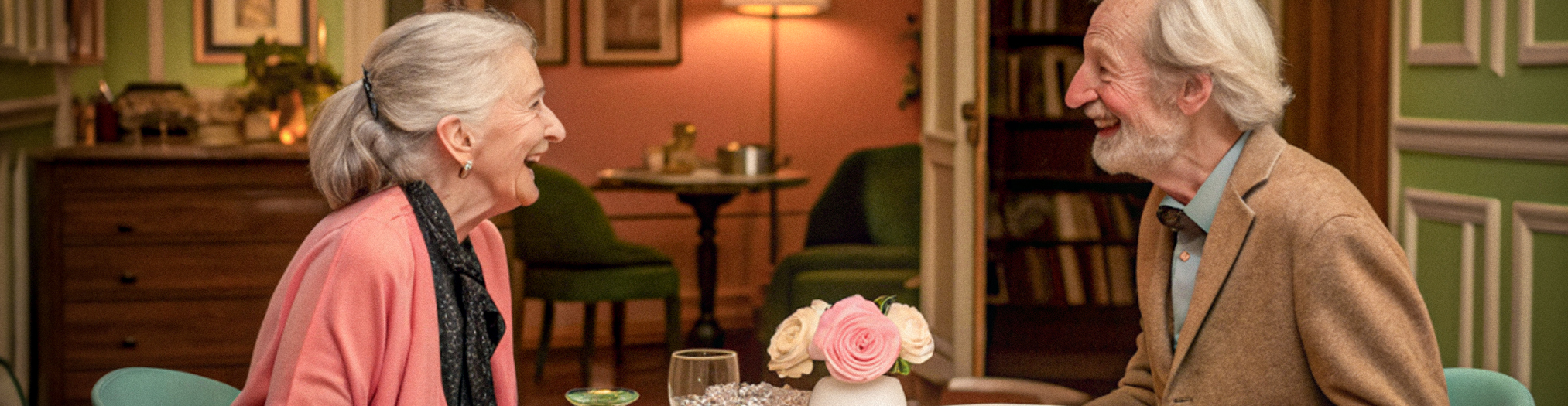
Passionate, romantic, tender, intimate, altruistic… Love takes many forms. It’s expressed within the couple, but also lives through family bonds and friendships, through children, grandchildren and friends. What we must then ask ourselves is how nurturing love remains possible despite the passage of time. This is precisely one of the questions explored in this article, inspired by episode 10 of the podcast Dans quelques aînés, hosted by Luc Maurice (in French only).
Love through the years: from passion to companionship
Needless to say, love calls for patience and compromise, since it’s not always simple to unite two individuals whose pasts and life goals – as well as their values, opinions and preferences may differ. With aging, love also changes: the initial passion frequently makes room for intimacy and tenderness, a phase where we can often understand each other without saying a word.
In the tenth episode of the Dans quelques aînés podcast, Luc Maurice sat down with Carmen Lemelin, a psychologist and researcher at the Centre collégial d’expertise en gérontologie, and Diane Bellefeuille, a retired nurse who has been married and deeply in love for almost six decades. Together, they explored the theme of love, focusing especially on the importance of caring for and sustaining a relationship over the years.
“When our eyes meet, we understand each other. The look you share with the one you love is so powerful – it’s as though you’re seeing into the depths of the person. People often say to me, ‘It’s obvious how much you love your Robert. It shows in your eyes.’ (…) We have differences and similarities. We each have our own strengths, and we want to build something together,” confided Diane Bellefeuille*.
Love put to the test: sustaining a relationship despite challenges
We all know it: life as a couple is rarely a smooth, untroubled journey. Who on Earth can claim never to have gone through hardships with their partner? No one, of course!
Beyond daily difficulties, aging and declining autonomy can likewise place a strain on a loving relationship. As psychologist Carmen Lemelin, who also teaches at Cégep Drummond, explains, the true challenge lies in not allowing small and large troubles to dominate everything and infiltrate the couple’s bond.
Indeed, it’s easy to make illness or loss of autonomy the sole topic of conversation. Yet for a relationship to remain vibrant and fulfilling, partners must continue to talk about what inspires them. It is also important to maintain gestures of affection – such as kisses, hugs and compliments – and to nurture shared projects, even if they are simple.
According to Carmen Lemelin, these are all ways to nurture love during more difficult times. “What’s great about a project is that you anticipate it beforehand, you live it in the moment, and afterward it becomes an unforgettable memory,” she explains.
Family and friendships: antidotes to isolation and loneliness
It’s worth noting that love is by no means limited to romantic couples; it can be expressed in many different ways and bring great happiness. Friendships and family relationships play a vital role in emotional well-being, no matter one’s age. In episode 10 of the Dans quelques aînés podcast, Carmen Lemelin emphasizes that such connections are powerful antidotes to isolation and loneliness.
Furthermore, living in a seniors’ residence fosters the development of new relationships. Organized activities, common areas and a strong sense of community make it possible to sustain the emotional ties that are vital to personal well-being. A study by Professor Mélanie Levasseur, OT, PhD, from the Université de Sherbrooke, even shows that opportunities for social interaction are a key factor in the happiness of older people living in residences.
“There are people who move into a residence after losing their spouse and who find someone else. Love has no age. A couple has no age.” – Diane Bellefeuille, resident.
Everyday gestures: nurturing love
Love doesn’t thrive on lofty words – it shows itself mainly through daily gestures, such as smiles, glances and gentle teasing. These little attentions not only create lasting memories but also deepen closeness and intimacy between individuals.
Valentine’s Day provides a wonderful opportunity to celebrate love in all its forms, not just romantic partnerships. In senior residences, the holiday is marked in various ways: themed meals, screenings of romantic films, card exchanges, giving flowers and more. But you, too, can take steps to show your appreciation for the people you love.
Here are some simple ideas:
- Write a sweet note and leave it on your partner’s pillow, fridge or placemat – send them a letter or greeting card;
- Prepare a meal or a little treat with their favourite foods;
- Give flowers for no particular reason;
- Take a walk together, hand in hand;
- Share a relaxing moment (listen to music, do a puzzle, read a book aloud, watch a movie…);
- Whisper “I love you” in your loved one’s ear when they wake up… or leave it on their voicemail;
- Send a text to your loved ones wishing them a good day or good night;
- Create a personalized music playlist;
- Give a book by a treasured author, along with a personal note;
- Take the time to listen attentively to each other’s stories.
Any gesture is a good way to say “I love you,” whether to a partner, a friend or a family member!
To conclude…
With Valentine’s Day just around the corner, let’s take a moment to celebrate love in all its forms and to recognize the richness of the relationships that bring meaning to the years as they go by.
To learn more, feel free to listen to the episode L’amour from the Dans quelques aînés podcast. It provides a touching and insightful perspective on this emotion.
*The quote has been lightly revised to ensure clarity and flow.