
Aging Today and Tomorrow: How Can We Build Together?
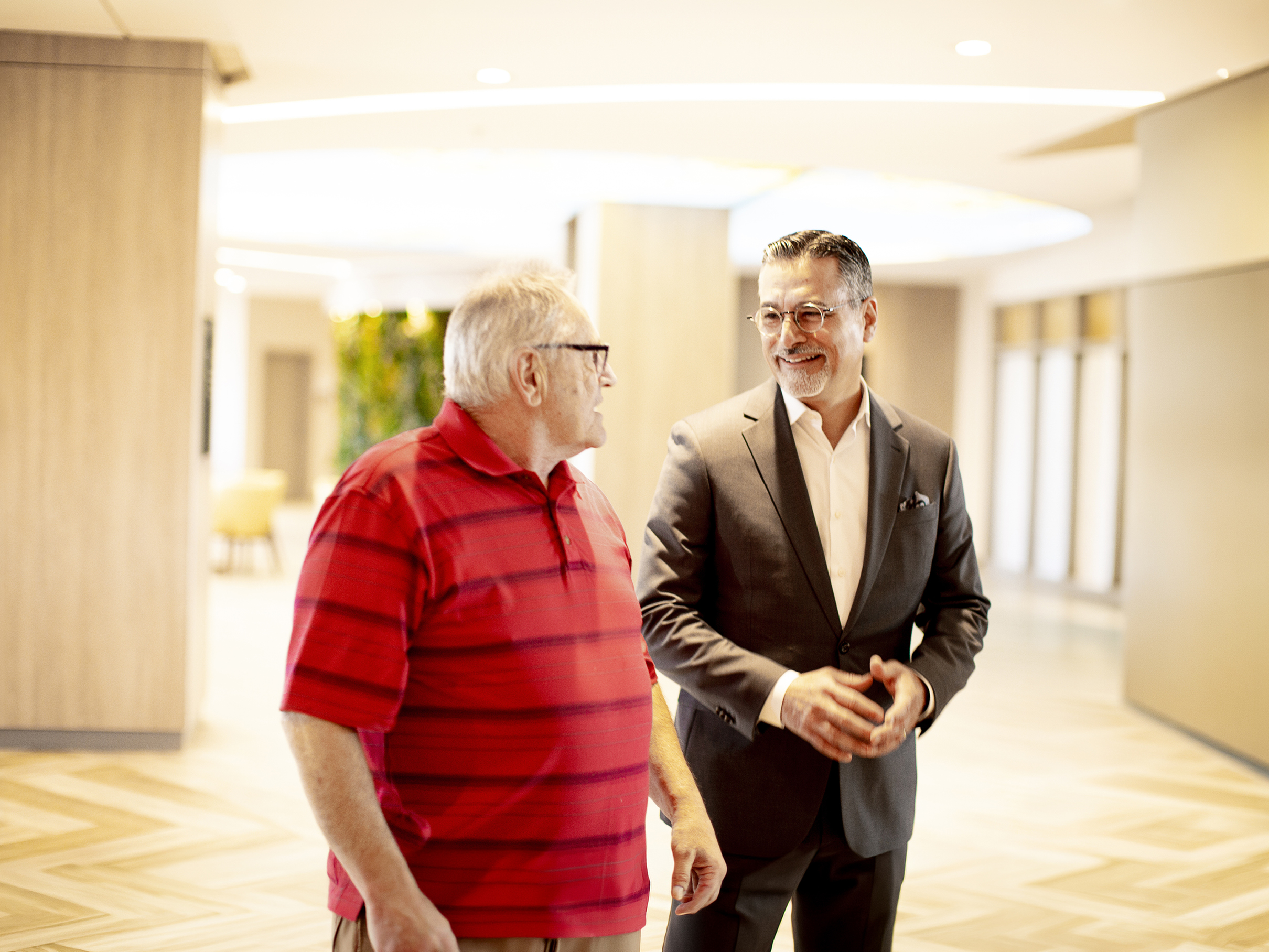
The International Day of Older Persons and last October’s provincial election campaign brought back a question we cannot ignore: what kind of society do we want to build together, so that all of us can age with dignity? Alain Champagne shares his vision…
We hear a great deal about our aging population, but are we talking about it in the right way?
We talk about it often, and that’s a good thing. But too often we look at aging through the same lens: system capacity, statistics, costs, available beds. These are real concerns, but growing older is so much more than that.
What strikes me most is that the people most affected are still too rarely at the table. Before we add services or invest in major projects, let’s ask seniors what they truly need, how they want to live and age, and how they want to take part in their community.
And if we listened more closely to seniors, what would we hear?
First, we would quickly learn that there is no one way to age. Older adults are not one uniform group. Their needs, hopes and choices change over time, and with the paths their lives have taken.
We would also hear a clear message: it’s time to stop treating seniors like children. They are full citizens, engaged and capable of making their own choices, contributing to their communities and accepting the risks they find acceptable.
A society that works for an aging population is not built for older people, but with them. That means giving them a voice, recognizing the many paths their lives have taken, and protecting their freedom to choose.
Speaking of freedom of choice, we know that most seniors want to grow older at home. How can we meet all of these needs?
Once again, we have to recognize that there is more than one way to age well. Many seniors want to stay at home for as long as possible, and that wish deserves to be respected. But we also need a broader idea of what “home” means. Growing older at home doesn’t have to mean staying in the same house for life!
What matters is not so much the address as being able to live in a setting that meets your needs, changes as your life changes and lets you stay independent.
Next, the right conditions must be in place to make that choice possible: suitable housing, services close to home, support for family and caregivers and quick access to care when it’s needed.
As you mentioned earlier, needs change over time. How can we work together to build living environments that can change with them?
The ideal solution today may not be the right one tomorrow, so the system must adapt to people – not the other way around. Rather than setting different housing models against each other, let’s build a connected range of options that can support seniors at every stage of aging.
Conventional homes, seniors’ residences, Quebec’s Seniors’ Houses (Maisons des aînés), intermediate resources and CHSLDs (long-term care centres) should be seen as solutions that work together. Each has its place at a different point in life’s journey.
Too often, we look for a single answer to a situation that is anything but simple. Meanwhile, demand far outstrips supply. With few alternatives, waiting lists keep growing, and too many people remain in a home that no longer meets their needs; which takes a real toll on their quality of life.
The goal is not to defend one model over another, but rather to build a society where everyone can get the right service, at the right time, in the right place, no matter who provides it.
Do you think this approach is realistic, given the state of public finances today?
That’s where creativity, boldness and a willingness to try new things become essential. To meet the challenge of an aging population, we need to offer more kinds of housing and services, and rally around a shared vision. Here again, government, community organizations and the private sector are not rivals. They are partners who each bring something different, and who need to work even more closely together.
Mission Unitaînés is a perfect example of what we can achieve when we join forces. It took political courage and a willingness to do things differently. Every partner brought fresh thinking to the table.
Collaboration works, and the results show: every unit is occupied, low-income seniors are being reached, the benefits are measurable and quality of life has improved right away. It’s a real and rapid social impact that people keep pointing to as a model.
An aging population is no longer a challenge for the future. We are living it now, and it’s high time to move from reacting to emergencies to planning ahead. By drawing on everyone’s expertise, we can build a society truly suited to our demographic reality, where the solutions are as varied as the people they serve.
We can’t act without the right resources, yet the labour shortage is in the news every day. How do we bridge the gap?
Having the means to match our ambitions is essential, and staffing is at the heart of it. Here at Le Groupe Maurice, and in many other organizations, we’ve seen what a difference steady teams make: familiar faces, trusted relationships, and more reliable, higher-quality care and service. Training the next generation, giving these careers the respect they deserve, and supporting managers so that staff want to stay will take time, but it can’t be avoided.
What other levers should we count on to meet the needs ahead?
With fewer workers available and growing pressure on public finances, we can no longer afford to overlook the vital contribution of workers from abroad. Sadly, the heavy administrative process leaves many of them in limbo. Behind the forms and the delays are real people, families and life plans that are put at risk.
If we want stable teams caring for older adults, our immigration policies must also offer clear prospects and simpler processes for the people we count on. These workers are already here. They contribute to our communities, take part in the economy and help sustain the social safety net we’re all so proud of.
That stability will matter even more as the demand for home care workers grows faster than ever in the coming years. It’s a major blind spot in today’s debate. Meeting that need will take more collaboration, with each partner assuming its role.
Working better and building together also means making the most of what we already have. Before we sharply increase budgets, let’s be sure we are using existing resources to their full potential. The needs are immense, and both our people and our funding will remain limited. It’s not a question of funding versus productivity. The two must go hand in hand.
You recently signed an open letter in Le Devoir about the need to reduce the regulatory burden on businesses. Why is this issue so critical?
Let me be clear: reducing the regulatory burden is necessary, but protecting seniors and the quality of services are non-negotiable. We do not need to discard every rule. We need better-designed rules, suited to real risks and to the size and nature of each operation.
The link is direct: regulatory complexity contributes to residence closures and narrows the options available to older adults. Some standards have become so heavy and so poorly suited to the setting that they make life significantly harder for operators instead of supporting their mission.
Is it realistic to try to balance safety, independence and quality of life in this case?
Absolutely, but we also need to rethink how we, as a society, approach risk. A one-size-fits-all focus on overprotection does not serve individuals well. By trying to manage every possible risk, we sometimes limit the independence and freedom of the majority for no good reason, hold back innovation and tie up large amounts of staff time and money that could go where the needs are greatest.
Let’s stop treating all seniors as if they were vulnerable, ill or frail. Instead, let’s tailor our efforts to the realities of those who need more support or protection. Balancing safety, independence, quality of life and innovation is possible, as long as our regulations are consistent with the goals we share as a society.
In your view, what is the most promising way to approach aging?
Aging is not a crisis to manage, but a transformation to plan for. Why not make it a true collective effort, guided by dignity, independence and freedom of choice? Let’s put an end to silos and make full use of everyone’s strengths and expertise.
We say we want to support aging at home, yet we restrict access to the workers we depend on. We acknowledge that the population is aging faster, yet we let residences close. We want more housing, yet the rules slow down new projects. Our goals and our means do not line up. We are paddling against the current.
We spend more time reacting than acting. Rather than going from one challenge to the next, let’s build a shared action plan we can all stand behind. Let’s create steady, dependable conditions and the means to support innovation and partnerships, guided by a long-term vision that goes beyond election cycles and the pressures of the moment.
We forget it, and sometimes we would rather ignore it: older adults are not just “them”. They are also us. So the question is not only how we care for today’s seniors, but what kind of society we want to grow older in tomorrow. Every decision we make, or avoid making, right now is really a choice about our own future. Let’s have the courage to challenge every form of ageism; including the kinds that creep quietly into our policies, our habits as a society and the very way we think about aging.
Thank you, Alain, for this thoughtful and inspiring perspective. One thing is clear: the future of aging is being shaped today, and shaping it is a collective responsibility.